Living Systems as the Benchmark for Scalable, Resilient, and Self-Learning Architecture
Why the Architecture of the Future Needs Living-System Properties
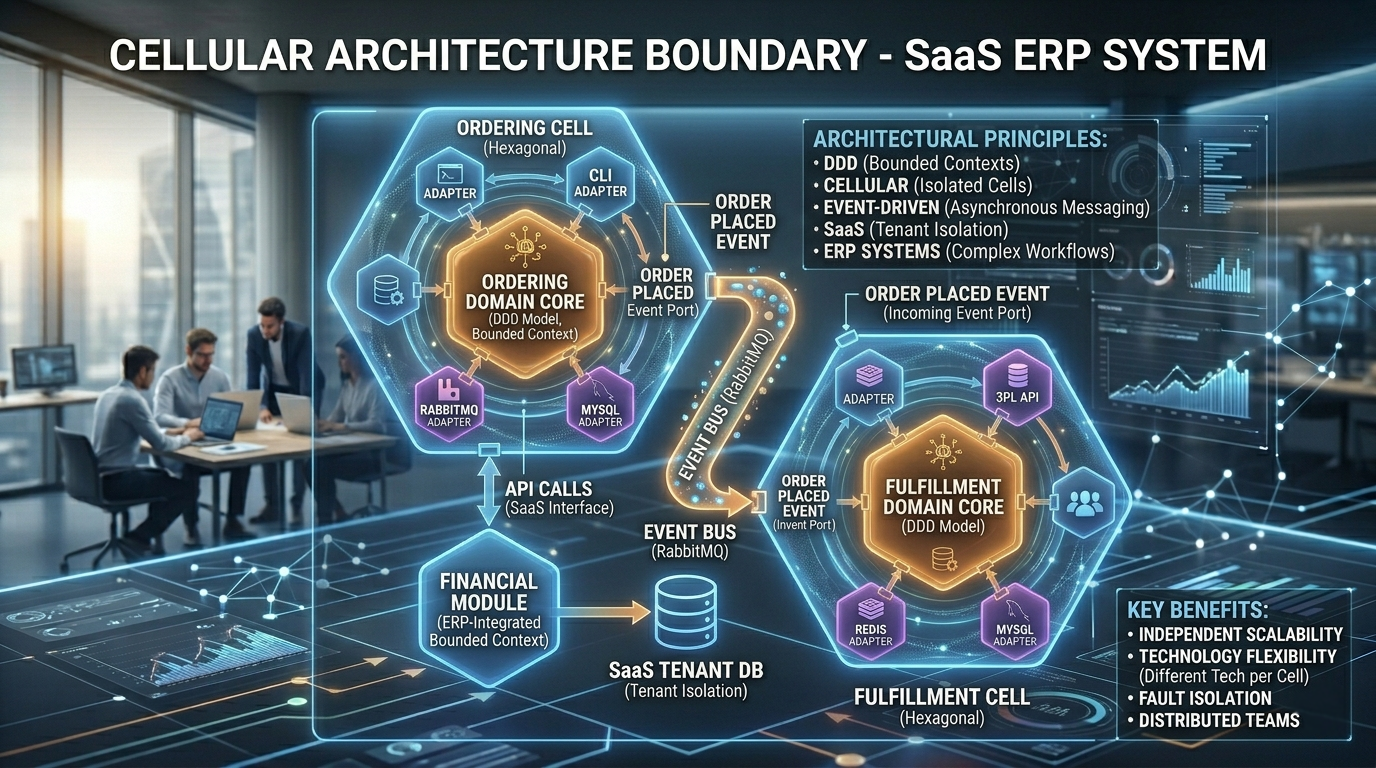
Layered, Onion, and Hexagonal architectures have already proven their effectiveness. They help separate responsibilities, reduce coupling, isolate business logic from infrastructure, and build scalable enterprise systems. These approaches became the foundation of modern ERP platforms, SaaS ecosystems, cloud-native solutions, and microservices architectures. However, all of them primarily describe the structure of software — how dependencies, layers, interfaces, and communication between components should be organized.
As digital ecosystems continue to grow in complexity, the industry faces a new challenge: modern systems must not only be well-structured, but also exhibit characteristics of living organisms. They must adapt to workload changes, recover from failures automatically, evolve without complete shutdowns, redistribute resources dynamically, learn from events, and remain resilient in constantly changing environments. Classical architectural approaches partially address these needs, but they still do not provide a unified model for designing systems as living, self-evolving entities.
This is where the concept of Cellular Architecture emerges. It is not a replacement for Layered, Onion, or Hexagonal Architecture — it is the next evolutionary stage of architectural thinking. If previous architectures answer the question “how should code and dependencies be organized?”, Cellular Architecture answers a much broader question: “how can we build digital systems capable of living, adapting, and evolving for decades?” The focus shifts from static structure to system vitality — the ability to self-organize, self-heal, regenerate, and continuously evolve.
From the perspective of kaizen, Cellular Architecture becomes especially significant because it is fundamentally built around continuous improvement. In nature, a cell does not rely on disruptive “major releases” every few years. Instead, it constantly renews itself, repairs damage, optimizes internal processes, and adapts to environmental changes. For the IT industry, this introduces a new philosophy of software design: architecture is no longer a static blueprint, but a dynamic ecosystem capable of evolving without losing its integrity.
For architects, Cellular Architecture represents an attempt to unify DDD, event-driven systems, distributed computing, AI-driven automation, and self-healing infrastructure into a single bio-inspired architectural model. For product teams, it offers a strategy for building SaaS platforms that can evolve for years without requiring complete rewrites. For investors, it provides a pragmatic framework for long-term sustainability: the more a system can adapt and scale without exponential operational costs, the greater its strategic market value becomes.
Cellular Architecture is becoming a natural next step in the evolution of software architecture because the digital world is gradually moving from “software applications” toward “digital organisms.” And as ERP platforms, AI ecosystems, and global SaaS infrastructures become increasingly complex, one reality becomes clear: the future belongs to systems that can not only operate — but also live.
How Nature Created an Architecture the IT Industry Is Still Approaching
The modern IT industry continuously strives to build systems capable of scaling, self-recovery, efficient resource distribution, and evolution without complete downtime. Software architects design distributed platforms, cloud infrastructures, self-healing systems, and intelligent networks inspired by engineering principles of resilience and reliability. Yet the most advanced architecture of this kind has already existed for billions of years. It is the biological cell.
The Cell as a Distributed System
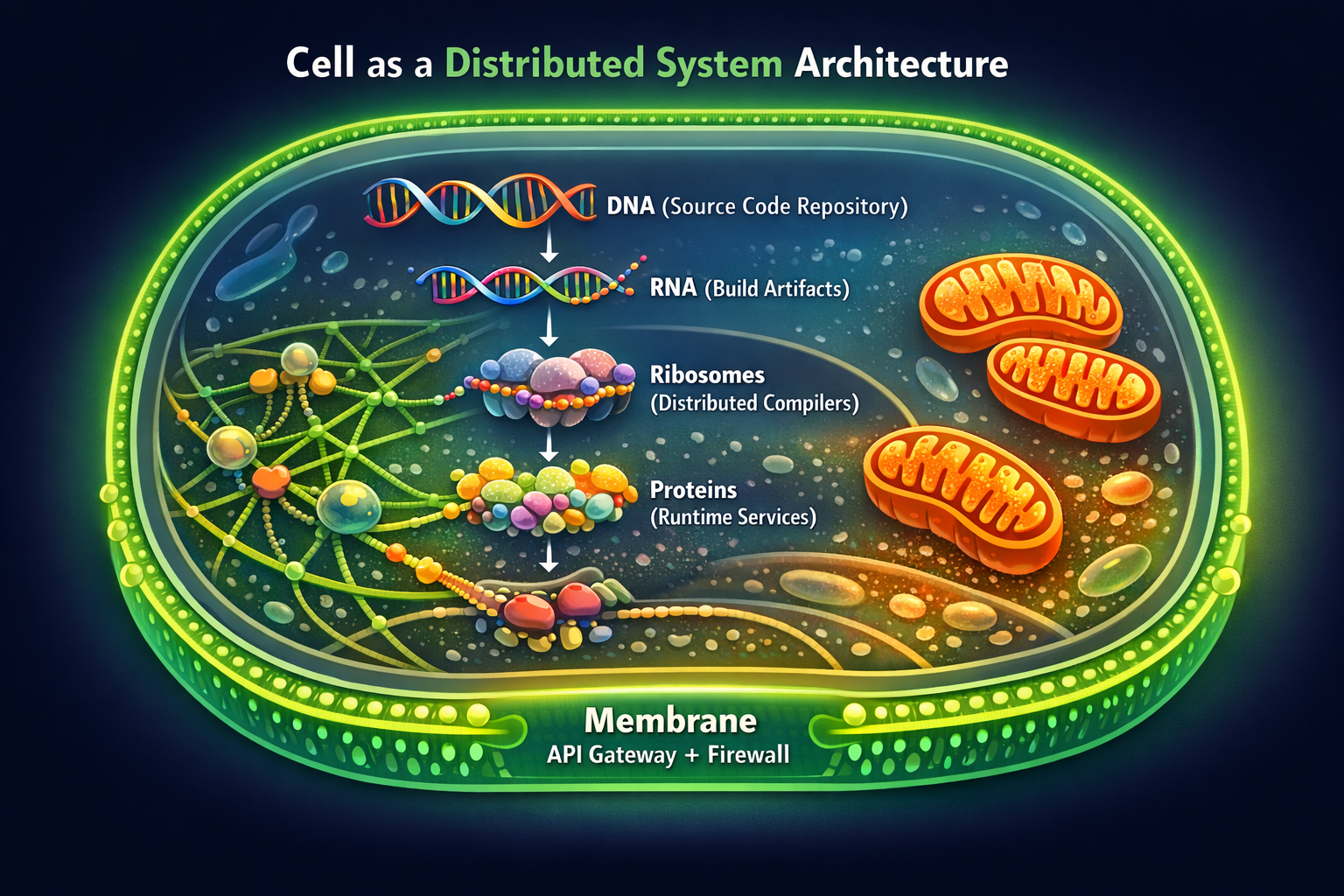
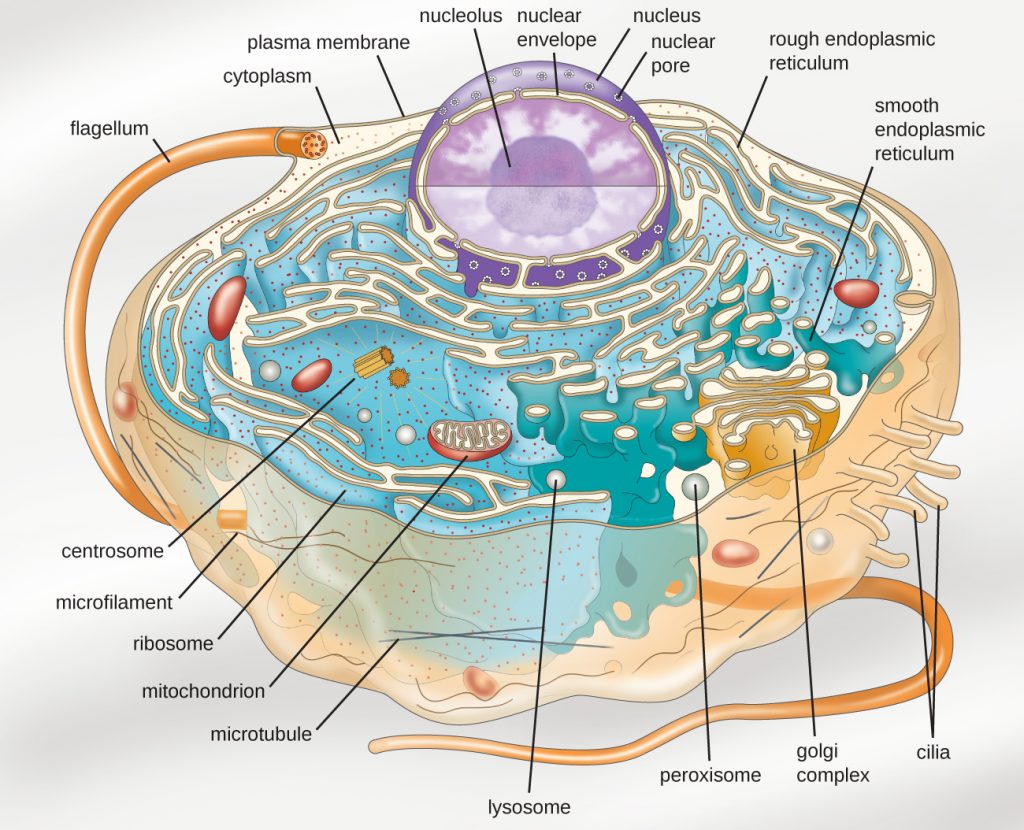
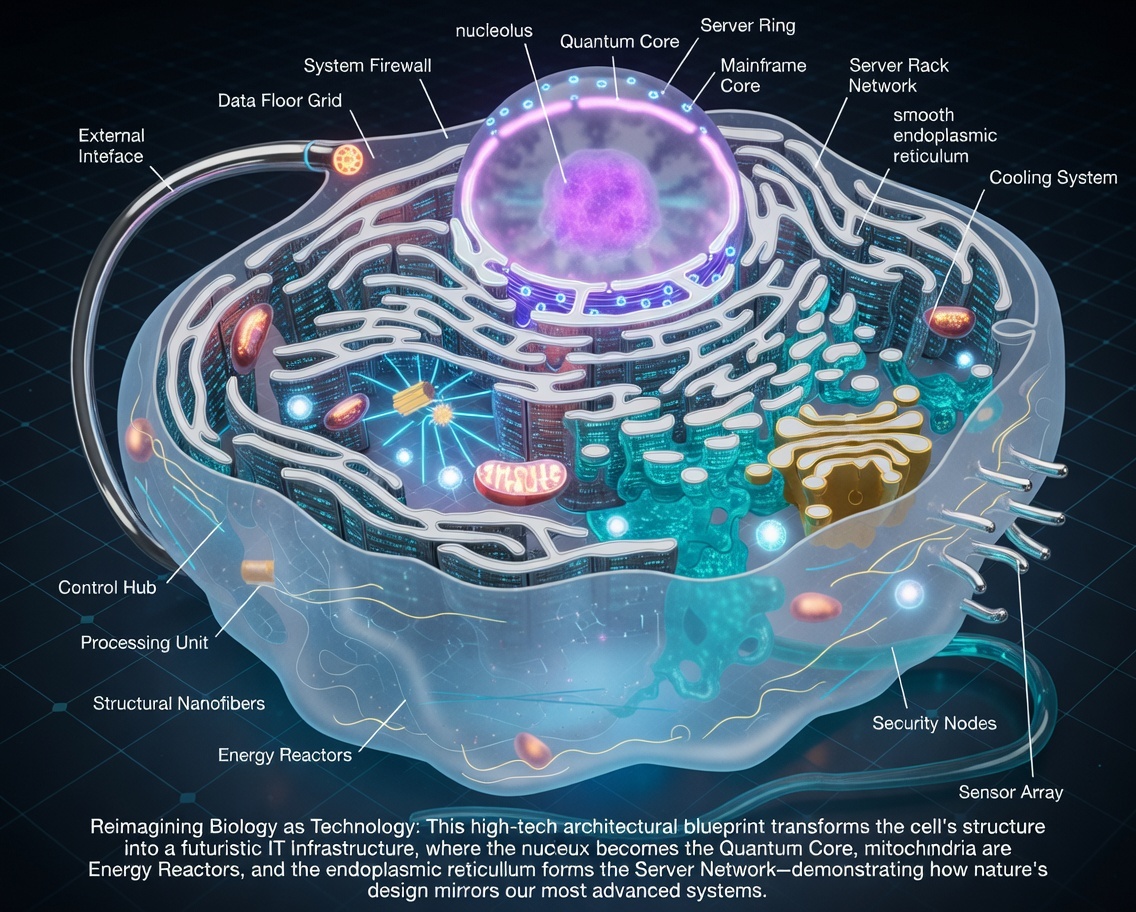
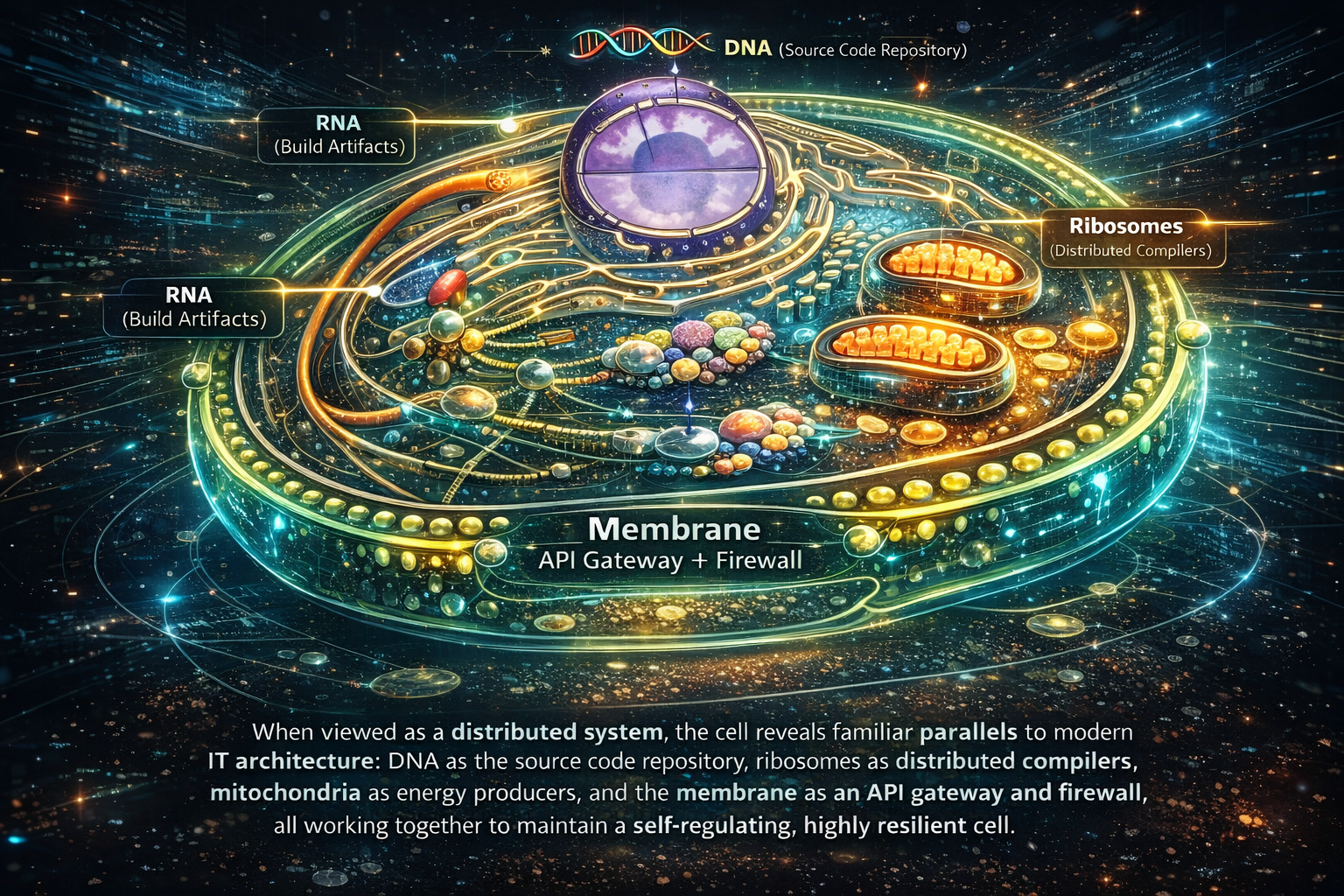
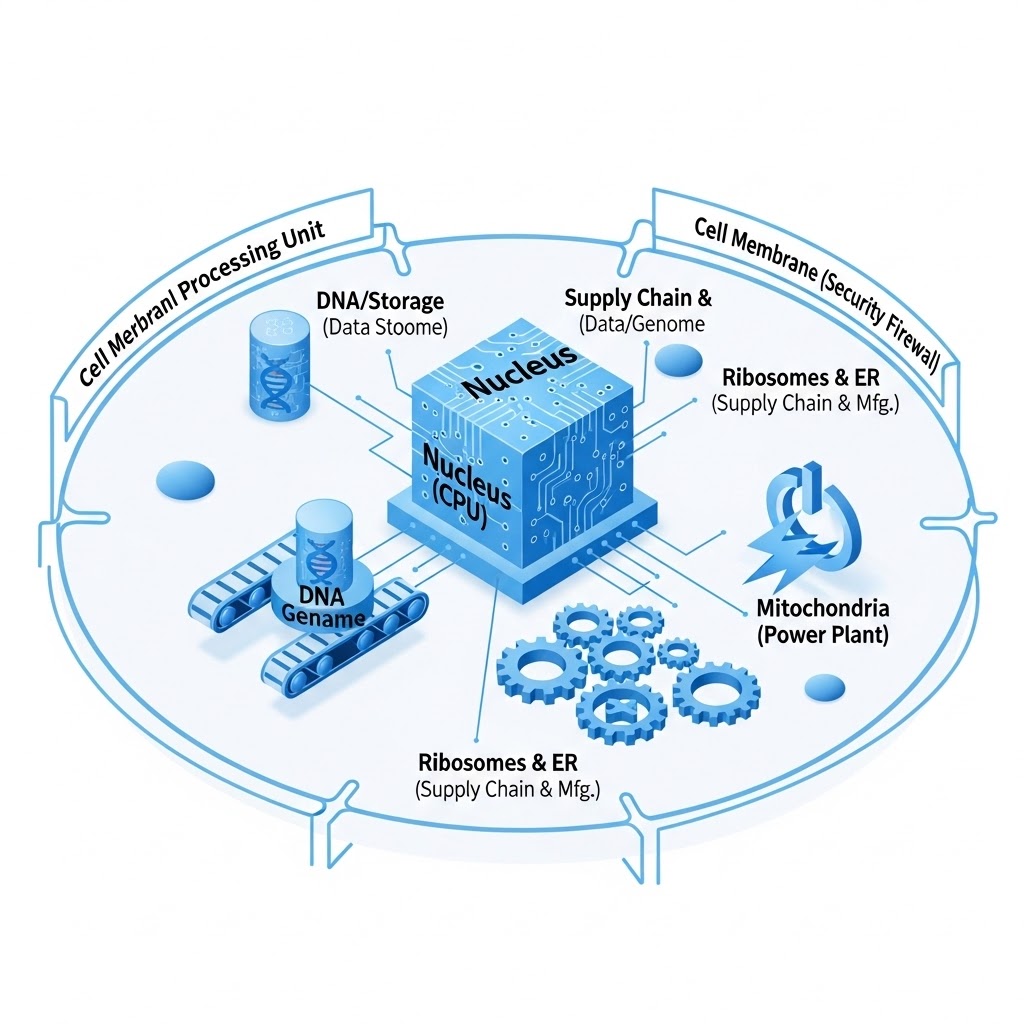
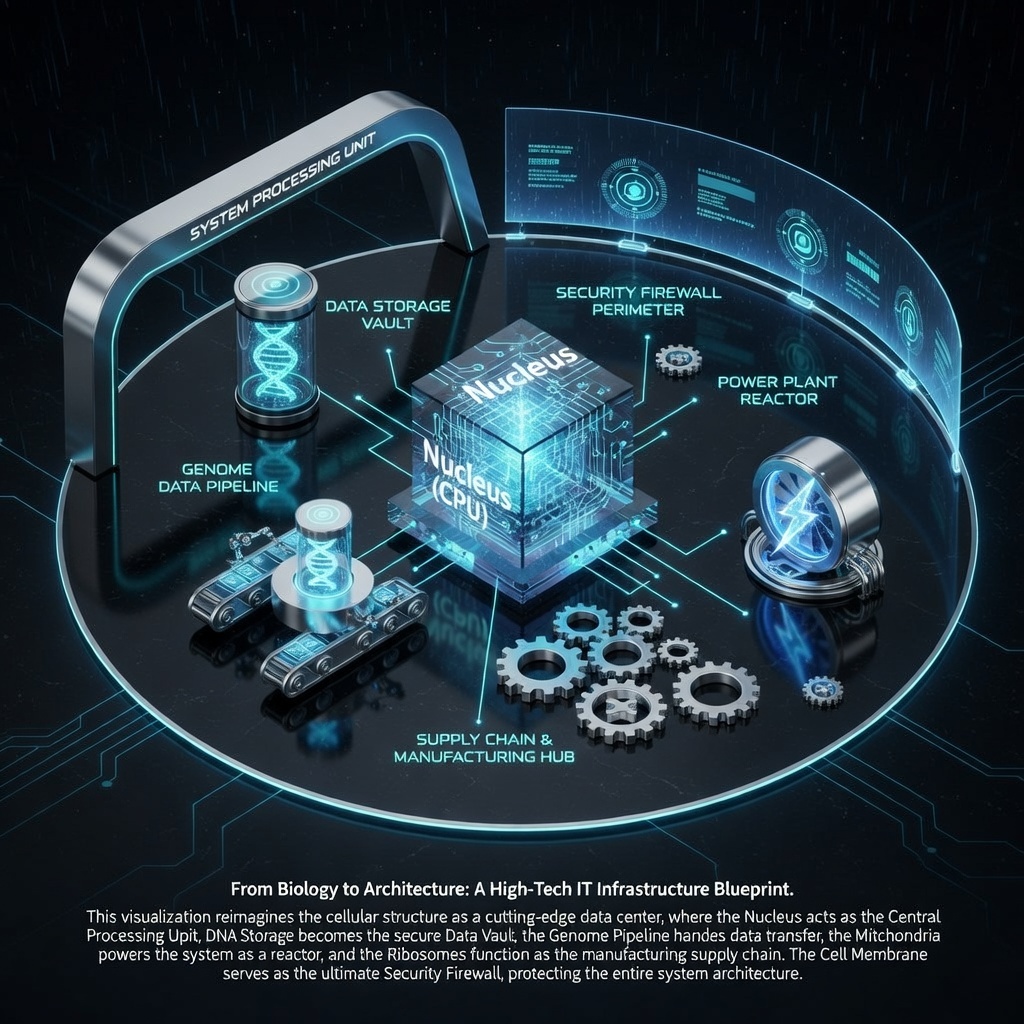
When viewed through the lens of modern software architecture, it becomes clear how closely biology and IT follow the same principles. A cell is a highly organized distributed system in which every component performs its own specialized role while remaining part of a unified ecosystem. All processes operate in parallel, constantly exchanging data and coordinating in real time.
DNA as the System Source Code
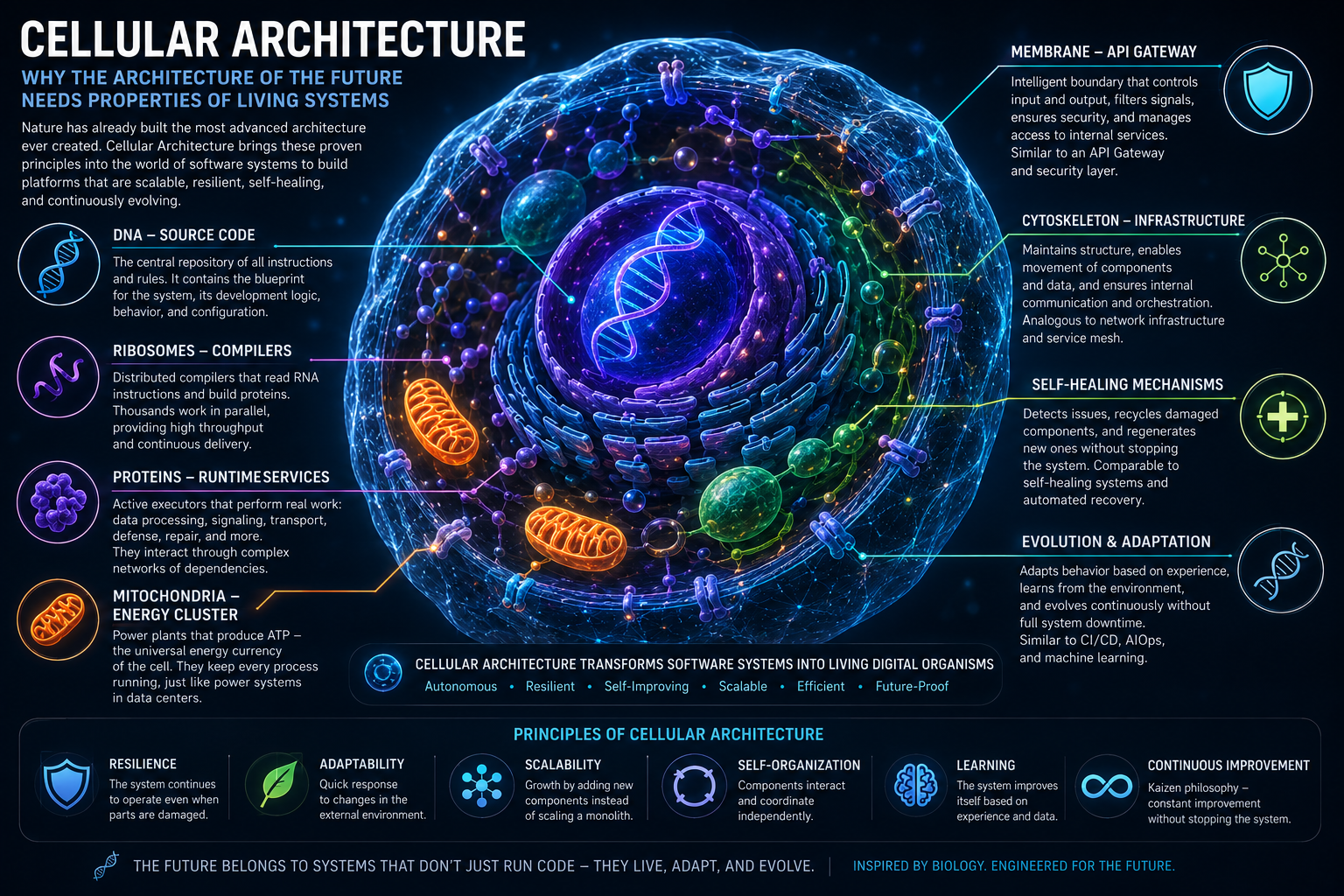
At the center of cellular architecture lies DNA — the primary carrier of information and instructions. From an engineering perspective, DNA can be compared to a centralized source code repository. It stores the core operational rules of the system, its development mechanisms, and response scenarios for environmental changes. Genetic information is never used directly: it is first transcribed into RNA and then transformed into proteins that execute real operations.
Ribosomes as Distributed Compilers
Ribosomes can be viewed as the cell’s distributed compilers. They receive instructions in the form of RNA and transform them into protein structures. Thousands of ribosomes operate simultaneously inside the cell, providing an extraordinary level of parallelism and performance. In essence, they function as autonomous build systems continuously generating runtime components required for life.
Proteins as Runtime Services
Proteins are the active execution mechanisms of the cell. They handle substance transport, signal processing, system protection, damage repair, and nearly all computational and physical operations. In modern terminology, proteins can be compared to runtime services that launch on demand and interact through a complex dependency network.
Mitochondria as the Energy Cluster
No computing system can function without energy. In the cell, this role is performed by mitochondria — specialized energy centers producing ATP. ATP serves as the universal energy currency for all internal processes. Similar to modern data centers and cloud infrastructures, mitochondria provide uninterrupted power for computational operations.
Membrane as an API Gateway
The cell membrane represents the intelligent boundary of the system. It regulates resource exchange, filters external signals, and controls access to internal components. In software architecture, the membrane resembles both an API Gateway and a security system. It provides protection, routing, and communication control between the internal environment and the outside world.
Self-Healing and Evolution
One of the most remarkable features of cellular architecture is its self-healing capability. Damaged components are detected, recycled, and replaced without shutting down the entire system. Moreover, cells can adapt to environmental changes and evolve over time. These are precisely the qualities that modern artificial intelligence, autonomous platforms, and self-healing infrastructures aim to replicate.
Why the Future of ERP and SaaS Resembles a Living Cell
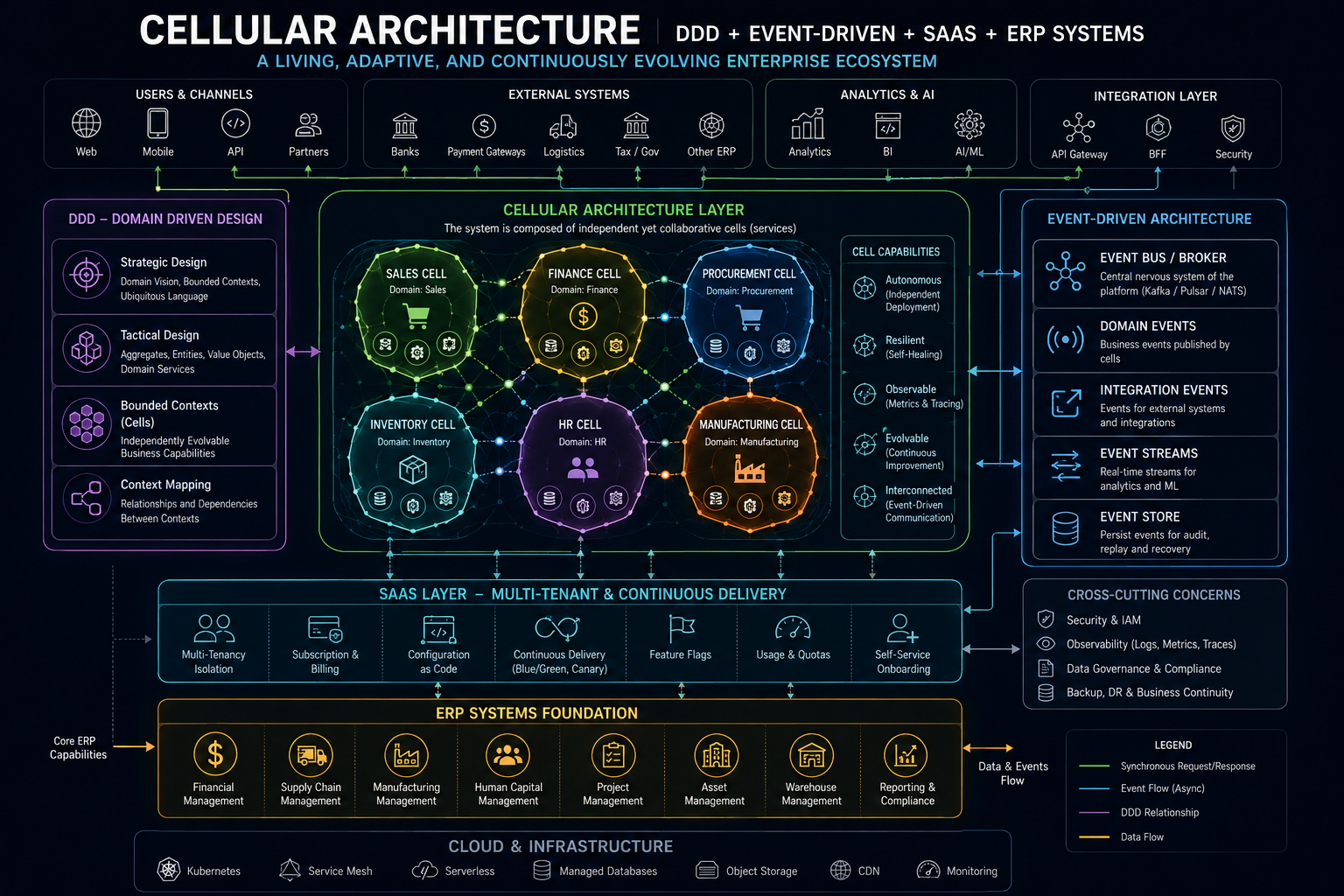
Cellular Architecture extends the principles of DDD, microservices, SaaS, and modern ERP systems, but elevates them to a more fundamental level — the level of a living system. DDD defines domain boundaries and semantic structure, microservices provide technical decomposition, SaaS enables continuous value delivery, and ERP systems demand high stability and coordination under complex business constraints. However, each of these paradigms individually remains an engineering layer rather than a unified model of system “life.”
Within Cellular Architecture, these concepts begin to operate as a single organism: DDD domains become functional cells, microservices act as specialized organelles, SaaS becomes the continuous flow of updates and interactions, and ERP evolves into a complex coordinating ecosystem. The system is no longer a collection of services — it becomes an adaptive network where every component not only performs a function but also participates in the self-regulation and evolution of the entire platform.
Through the lens of kaizen, this represents a shift from designing “finished systems” to designing “continuously improving systems.” Architecture is no longer a static blueprint — it becomes an ongoing process. For product teams, this reduces the cost of change and accelerates iteration cycles. For architects, it removes the boundary between system design and system lifecycle. For investors, it becomes a pragmatic indicator of long-term resilience: systems built on kaizen principles inherently carry lower structural decay risk over time and higher adaptive value in evolving markets.
Cellular architecture demonstrates that sustainable system growth is achieved not through isolated revolutionary changes, but through continuous adaptation, optimization, and incremental improvement. This is the essence of the kaizen philosophy — constant evolution embedded into the very nature of life itself. For designers, it represents a balance between functionality and elegance; for product teams, a model of continuous product evolution; and for investors, proof that the most resilient systems are those capable of learning, adapting, and scaling without losing structural integrity. Biology suggests that the future of high-tech platforms lies not only in computational power, but in the ability of systems to become architecturally “alive.”
The "Creator" concept unifies programming, design, and 3D modeling into a single workflow, empowering a single expert to build high-efficiency ERP systems. By applying Kaizen principles to this synergy, one can achieve continuous product improvement and gain a significant advantage in speed and quality over traditional development teams.
A modern digital product relies on three pillars, each critical to the system's overall viability. Integrating these disciplines through the continuous process of Kaizen creates a system that does not just automate tasks but actively adapts to market shifts, ensuring sustainable growth for the business.
The 3D Scorpion logo symbolizes the synergy of global IT solutions, engineering precision, and the creator's personal accountability for system quality. The visual composition blends robust architecture with the Kaizen philosophy, highlighting a commitment to continuous improvement and the uncompromising protection of client interests.